REAL ESTATE TECHNOLOGY PERSPECTIVES THAT COUNT

Behind the Raise
Blog
News
Portfolio Company Q&As
Videos
Thank you! Your submission has been received!
Oops! Something went wrong while submitting the form.
View of large cities' downtown
RET Ventures Eighth Annual Summit Blog
Sep 15, 2026
|
XX Min Read
RET Summit 2026: What’s Changing in Real Estate Technology

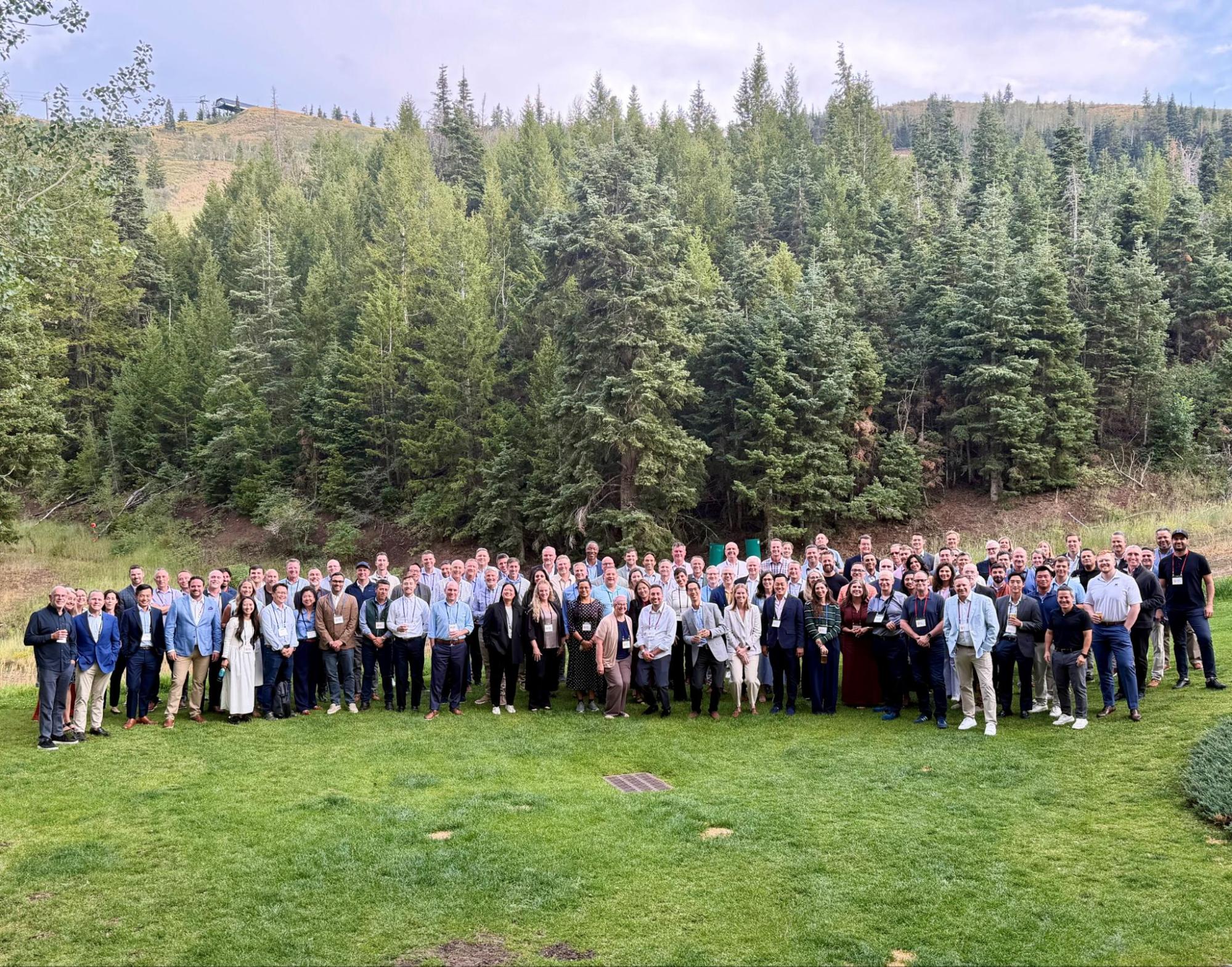
RET Ventures recently brought together more than 100 leaders, the majority of them C-level leadership, from 45 leading owners, operators and developers across its multifamily and single-family rental (SFR) Strategic Investor group for its eighth annual Summit in Park City. They were joined by a subset of RET's portfolio companies building the next generation of technology solutions for the industry.

Previous Summits focused heavily on the external — what new solutions exist and how can the group implement them. This year, that thread remains, but with increased emphasis on the infrastructure the group has been investing in and the capabilities AI is bringing to their internal teams. An important question posed was not simply what new technology to adopt, but what capabilities operators should build themselves and where they should rely on external partners. 

We also discussed the case for consolidating technology around broader platforms against the benefits of maintaining a more diverse "best of breed" technology stack and how that will evolve in a future where AI agents are more broadly deployed. Those choices need to take into account the changing economics of technology and where and how the value created by new tech will accrue, both for operators and vendors. 

The conversation around AI also felt different. The industry is moving beyond experimentation toward execution, and the ground under the stack is shifting. There is a growing focus on AI agents and the resources needed to put them to work, while operators are increasingly thinking about what it will take to move AI from experimentation into daily workflows. 

A recurring theme was the pace of change. Technologies that once seemed emerging are a routine part of the industry's day-to-day conversation, with new generations of solutions already emerging, prompting new questions about how these tools fit together, how operators can get the most value from them and whether the industry's technology infrastructure can keep up.

The three-day Summit brought together the three perspectives needed to answer those questions: operators who understand the problems firsthand, entrepreneurs building solutions and investors looking at where the market is heading. That combination is one of the things that makes the RET network particularly valuable.

We’re grateful to everyone who joined us and contributed to this year’s Summit, and we look forward to continuing the conversation.

‍

Behind the Raise: RET’s Investment in Get Covered
Nov 29, 2021
|
XX Min Read
The Emergence of Insurtech. Over the last decade, the $1.3-trillion U.S. insurance industry has become a focal point for venture capital, driving emerging disruptors to bring
Featured
All
Blog
Behind the Raise

The Emergence of Insurtech

Over the last decade, the $1.3-trillion U.S. insurance industry has become a focal point for venture capital, driving emerging disruptors to bring sorely needed innovation to the space.

”Insurtech” has already produced major success stories, with billion-dollar valuations and public exits for names such as Lemonade and Hippo, which leverage technology to power a step-change in the ease of access for the average consumer to secure and manage their basic insurance needs. With the early success of these first movers, the insurtech market has accelerated in kind, to an estimated $2.72 billion in 2020.

Insurtech Meets Rent Tech

Insurance is a critical category for RET and our Strategic Investors, comprising a group of enterprise-scale residential real estate owners and operators representing ~2.4m units of multifamily and single-family rental inventory. We have been monitoring the growth in this sector for years, tracking the emergence of various solutions focused on renters and multifamily owner-operators. We announced our formal entry into the sector earlier this month, leading a $7 million Series A funding round for Get Covered.

Through an easy-to-use interface, Get Covered streamlines the purchase and tracking of every form of renter-related insurance, including renters’ insurance, master liability programs, security deposit alternatives, and other risk management products.

Our partnership with Get Covered marks RET’s first standalone insurtech investment - one that follows a deliberate, extended process to identify a solution that best solves the pain points our Strategic Investors experience as enterprise scale owner-operators.

Proven Value for Rental Communities

Renter’s insurance is largely a commodity product in a market crowded with both traditional and tech-enabled offerings. Recognizing this, Get Covered has been built from the ground up to differentiate itself by providing a better insurance operating system to connect all stakeholders in the value chain, mastering the complex relationship between owner-operators, property managers, and residents. While other tech-enabled solutions offer a single or small number of products, often directly to consumers, the Get Covered team has built a platform that offers a comprehensive, flexible suite of insurance products and an API integration that allows for seamless and near-instant implementation into existing property management systems.

Get Covered’s unique approach allows operators to accurately, comprehensively, and efficiently track resident compliance with a community’s minimum required policy for the first time and automatically tracks coverage throughout the term of the lease.

With the help of our Strategic Investors, we spent significant time test-driving Get Covered, building conviction that the platform addresses the systemic weaknesses in the resident-insurance ecosystem. With a new round of funding in hand, Get Covered will be able to drive more efficient and transparent adoption of insurance at multifamily properties across the country - offering tangible benefits not only to residents but owners and property managers as well.

Insurtech & Real Estate: Early Innings

Get Covered represents RET’s first insurtech investment, and it will not be our last. As we continue our work to build a better tech stack for the real estate sector, we expect to identify additional pain points at the intersection of insurance and real estate. We see potential examples in the property and casualty sector, as well as with legacy insurance carriers that own large portfolios of real assets, or elsewhere in the industry value chain.

We could not be more excited to partner with Get Covered and to enter a new area of real estate technology that holds so much potential for our partners.

Portfolio Company Q&A: Kasa
Nov 18, 2021
|
XX Min Read
Below is the first installment in a new series profiling RET portfolio companies and their executives. Today, we talk to Roman Pedan, founder and CEO of Kasa
Featured
All
No items found.

Below is the first installment in a new series profiling RET portfolio companies and their executives. Today, we talk to Roman Pedan, founder and CEO of Kasa.

RET: Can you give a quick rundown of how you came to found Kasa?

RP: I was working in private equity at KKR in New York City and we were doing huge deals, deploying immense amounts of capital to buy hotels. But in my personal life I was Airbnb-ing an apartment on the side and staying in more Airbnbs when I traveled. It seemed like hotels represented the old way people travelled, whereas more and more people seemed to want something different.

But Airbnbs weren’t perfect. While short-term rentals were getting popular, they lacked consistency and reliability and therefore hadn’t fully earned trust from consumers. I founded Kasa to try to solve that problem.

RET: What is the inefficiency in the real estate industry that makes Kasa necessary?

RP: Here’s the main issue: On any given night, over 1 million apartments sit vacant across the US. Combined, that’s a major metropolis of emptiness. For property owners, that means less yield on their investment. For potential renters and travelers, that means empty space that nobody is using. Kasa helps utilize space more efficiently which means more cash flow to owners and more options and lower prices for renters and visitors.

RET: How do you solve that problem for property owners and guests?

RP: For property owners, the Kasa model—managing the end-to-end accommodation experience and passing along 100% of the cash flow, minus our management fee—generates above market returns. Multifamily owners can also easily backfill vacant space with Kasa rentals, and having Kasa in their buildings can help multifamily owners adapt quickly to changes in the community and adjust the unit mix to best suit the property needs as they evolve.

For guests, our model allows us to offer consistency: they get high-quality hospitality experiences for lower costs and in a wide range of locations.

RET: How does your technology differ from your competitors’?

RP: At one point, we realized we were operating a certain kind of hotel that had never existed before. Early on, we were managing 100 units spread across nine buildings, eight cities and three states, and there was no software that could support that kind of distributed operation. We had to build that technology ourselves, including software and systems that can better help us track operations of our distributed units, manage all aspects of the guest experience and support comprehensive financial reporting to our partners. We also stand apart with the rigor of our trust and safety technology and policies--they are our top priority and we believe they are also the most advanced and stringent in the industry. Ultimately, our technology generates better financial returns for our property partners, higher quality experiences for our guests and more trust with our neighbors.

RET: What advice would you give to a young entrepreneur just starting out in rent tech or proptech?

RP: Get in the weeds.

One oft-repeated snippet of leadership advice you hear is that executives should always stay as high-level as possible — they should learn to delegate and look at things from 1,000 feet.

I agree with that to a point, but you also have to get into the details and enable your team to do the same. I’ve stayed in many, many Kasas, for instance, and as part of that I’ve drilled into every detail of the customer experience. I’ve experienced it all firsthand. That’s crucially important for any leader, and it has informed my formulation of Kasa’s strategy moving forward.

RET: What accomplishment are you most proud of?

RP: Kasa was able to not just survive the COVID-19 pandemic, but we took the opportunity to quickly pivot and forge a clear path to continued growth. The sudden collapse of the hospitality sector caught us all off-guard, but I am so proud that the Kasa team was able to respond by developing a revenue-sharing management model that allowed us to continue to pass along income to our property partners while growing our business, as well. During COVID-19 we maintained occupancy levels that were double that of the hotel sector and we expanded our portfolio two-fold. It was a gargantuan feat, and I’m so proud that the Kasa team was able to accomplish it. The pandemic is not yet behind us, and we already know there is some hard work ahead as we continue to build our business. But I do think this once-in-a-century challenge will also offer once-in-a-century opportunities to rethink how we use livable space.

RET: What’s next for Kasa?

RP: We’re looking to accelerate investment in our proprietary technology. Our existing suite of products and systems are a key part of our “special sauce”: They enable Kasa to manage units across various property sizes and locations and generate unmatched operating margins, while maintaining exceptional guest experiences at an affordable price point. But there is still so much to be done. We plan to even more effectively streamline our operations and minimize onsite overhead by developing additional technology that focuses on community safety, guest support, and improving the Kasa experience at all touchpoints. We believe these developments will be transformational for the industry, and will represent entirely new tools that have never existed before. Stay tuned!

RET: If you weren’t a proptech executive, what would you be doing?

RP: It would have to be improv comedy. Generally, I like building things so it may seem strange to choose comedy, but I’ve done some improv and it’s much more similar to starting a business than many would think. In both, you build and create as you go, collaboration is key, and it is critical to have sound principles. Plus, besides being immensely challenging, improv comedy is fun!

RET: What is one challenge about building a proptech company that you weren’t aware of five or ten years ago?

RP: The fragmentation of the sector across the ownership, management, software, and hardware sides means there are immense integration challenges. In order for the various systems to work together in a cohesive manner, a company must vertically integrate to support the full stack of needs themselves, while also mastering enough lateral flexibility to fit with the fragmented solutions already in place. All of this should provide higher quality, lower costs and more dynamic offerings versus others — but it’s incredibly challenging to do right.

RET: There’s an old trope about real estate being slow to adopt technology? Do you think that is still an accurate characterization?

RP: Real estate has a few structural elements that make it slower to innovate--generally, people invest in real estate for predictability, and their investments remain very illiquid over long periods of time. As a result, real estate investors have tended to be risk averse and don’t want to try new technology. Technologists, accordingly, have steered clear of real estate.

However, as yields have compressed (and the impact of NOI moves has thus been magnified), the potential benefits of technology to increase revenue or cut expenses have become more obvious. The equation has flipped: it would be riskier (possibly existentially so) not to explore new technology, and owners who are able to incorporate technology thoughtfully will emerge with a competitive advantage.

RET Welcomes Shawn Mahoney
Sep 30, 2021
|
XX Min Read
As the multifamily and single-family rental sectors continue a significant transformation brought on by the pandemic, the need for purpose-built tech aimed at the industry
Featured
All
News

As the multifamily and single-family rental sectors continue a significant transformation brought on by the pandemic, the need for purpose-built tech aimed at the industry is more urgent than ever. The very nature and purpose of the home has changed for tens of millions of Americans, and firms like ours are racing to identify and foster tech that can accommodate this shifting way of life. With this in mind, we’ve recently brought on a new member of our team with a broad base of expertise identifying, vetting and piloting new rent tech tools from a multifamily operators vantage point.

Shawn Mahoney is the former longtime CTO at GID, a privately owned real estate development company and NMHC Top 50 owner — which also happens to be one of RET’s most trusted strategic partners. Shawn joined our firm earlier this year and has taken on a critical role performing deep analyses of not only prospective portfolio companies and their projected success, but also of the areas within multifamily operations that are most in need of tech-based innovation.

Shawn brings to RET decades of hands-on experience across real estate development, finance and technology, offering a unique perspective that spans the multifamily sector’s evolution from a reluctant —at times even resistant — stance toward tech, into the full-on embrace that is present across much of the industry today.

Early in his career, Shawn focused on tools that would incorporate more data and precision into portfolios — allowing large multifamily operators to reduce waste, tap new revenue streams and optimize operations across assets. Over time, that interest expanded, and reached a crescendo in recent years as proptech and rent tech companies received trillions of dollars in funding from venture capitalists like ourselves.

Having arrived at RET in the midst of an ongoing pandemic and nearly unprecedented upheaval across not only the multifamily sector, but the built environment as a whole, Shawn’s unique skills and experience have been vital to our success over recent months, and will continue to be in the years to come. His perspective as a former senior technology/operations executive will be invaluable as more and more of multifamily industry’s players take an increasingly hands-on role in the development and piloting of tech.

While real estate’s approach to these tools has changed over the years, the business remains a highly conservative one. As our strategic partners begin to wade further into the more volatile waters surrounding early-stage technology, they place their trust in us to pick the most viable and impactful products to strengthen their portfolios and their bottom lines over the long-term.

The presence of voices like Shawn’s — who brings savvy and experience based on time spent throughout all corners of our complex business — will be more important than ever as we continue to serve our partners’ needs and foster a better, more prosperous future for the rental home industry.

Portfolio Companies & Strategic Investors Attend RET Summit
Aug 31, 2021
|
XX Min Read
Last month, RET Ventures’ roster of real estate technology portfolio companies — along with the owners and operators that make up our strategic investor base
Featured
All
Blog

Last month, RET Ventures’ roster of real estate technology portfolio companies — along with the owners and operators that make up our strategic investor base — joined us in beautiful Park City, Utah for the annual RET Summit.

As an industry-backed venture capital firm, we are constantly looking for opportunities to foster integration and partnership within our ecosystem, and the Summit is a launching point for many of these conversations.

Having skipped the in-person summit in 2020 due to the pandemic, we were eager to gather this group in person for the first time in two years to engage in face-to-face conversations around emerging opportunities, challenges, and trends in the real estate technology sector. For three days, 100+ attendees participated in networking events, industry-focused panels, and company presentations fueling collaboration and connection.

Thanks to everyone who came out and joined us for another great Summit, helping us continue to drive innovation in multifamily, single-family real estate (and beyond)!

RET Ventures’ SmartRent Story: Strategic Support from Seed to SPAC
Aug 26, 2021
|
XX Min Read
Yesterday, RET portfolio company SmartRent rang the bell on the New York Stock Exchange, marking the beginning of its journey as a public company (NYSE:SMRT). RET led Smart
Featured
All
Blog

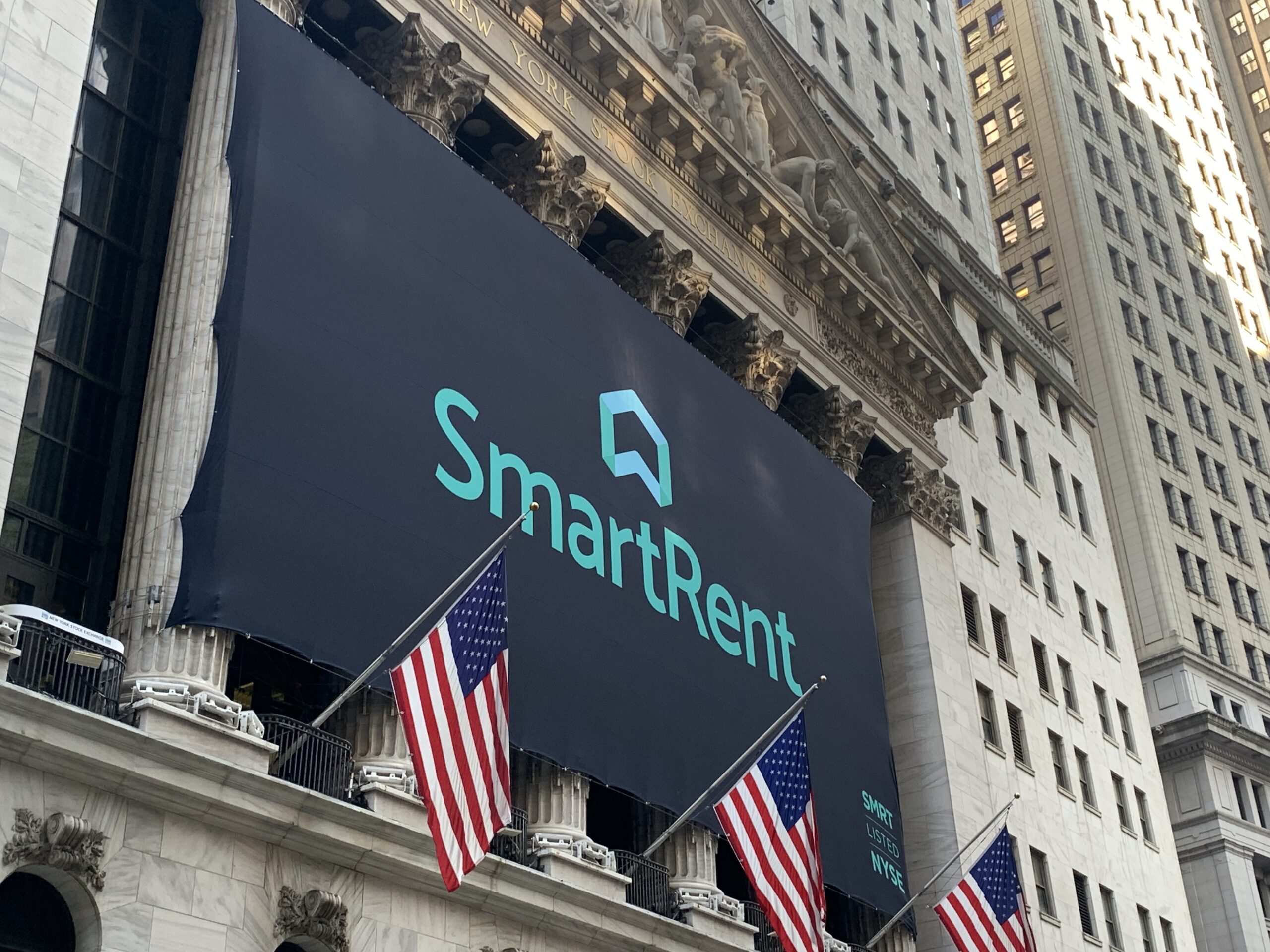
Yesterday, RET portfolio company SmartRent rang the bell on the New York Stock Exchange, marking the beginning of its journey as a public company (NYSE:SMRT). RET led SmartRent's seed and Series A rounds in large part because of the unparalleled leadership team led by Lucas Haldeman — and it was the executive team's product innovation and excellent execution that enabled SmartRent's rapid growth.

But we’d also like to think that RET’s unique approach to real estate technology investment helped make this milestone possible.

Our relationship with SmartRent goes back to our earliest days as a venture capital firm in 2017, when one of the immediate problems we observed was the demand for scalable enterprise-grade smart home technology for institutional multifamily owners and operators.

For some time, homeowners were the core adopters of smart home innovations, from thermostats to doorbells and lighting. Meanwhile, enterprise-scale solutions lagged, leaving multifamily owners and operators without a centralized platform to connect and manage devices across a portfolio, in either vacant or occupied apartments.

That was the problem we hoped to solve when we invested in SmartRent.

From the outset, we were thrilled to support SmartRent, providing resources and introducing development partners that facilitated the company’s growth. Three-plus years after our initial Seed investment, SmartRent is now live in more than 160,000 units across roughly 3,200 apartment and single-family home communities. Notably, as of the end of last year, over half of the units leveraging SmartRent technology were owned or managed by RET’s LPs.

Considering the scope of the problem SmartRent addresses and the quality of its solution, we were always confident in its prospects for success. SmartRent now going public via merger with FWAA is clear validation of our continuing confidence in the company.

SmartRent will be using the new capital raised in the SPAC transaction to expand globally. We are excited to continue our strategic partnership as SmartRent further solidifies its position as the leading smart home automation platform for the enterprise market.

SmartRent serves as the prime example of RET Ventures’ model in action – we are uniquely able to translate firsthand feedback about the multifamily industry’s technology needs into identifying products and services that can bring actionable change and tangible value to early adopters, and revolutionize the market in turn. As the global proptech industry builds on the momentum of the past year, we are excited to replicate the success RET’s partnership model has brought to SmartRent with the rest of our existing and future investments; we anticipate a growing number of successful exits for our portfolio companies in the months and years ahead.

Announcing RET Ventures Fund II
Jun 15, 2021
|
XX Min Read
When we launched RET Ventures four years ago, our pitch would often be met with some skepticism. Real estate technology was neither well defined nor well understood as
Featured
All
News

When we launched RET Ventures four years ago, our pitch would often be met with some skepticism. Real estate technology was neither well defined nor well understood as a category, and while we had strong leadership, a compelling investment thesis, and major REITs as fund anchors, our hybrid-strategic model was still unproven.

>What a difference four years make. The majority of our portfolio companies are now creating tangible value for the operations of our Strategic Investors and the broader industry. We’ve successfully exited several of our investments, and our first fund has delivered well beyond expectations, both in terms of operational benefits to the industry and financial returns to our investors.

With Fund II, our already substantial strategic investor base has more than doubled to 40+ institutional real estate owners and operators; as a group, these investors own or manage 2.4 million rental units (among the largest groups ever assembled). We initially targeted $130 million for Fund II, but received enough interest from strategic investors that the fund was far oversubscribed, a testament to the reputation RET has already garnered among major real estate organizations. Ultimately, we closed the fund with $165 million of commitments

As we begin to deploy Fund II, we want to thank all our stakeholders —new and returning investors, portfolio companies, and friends of RET— for their support. With residential real estate undergoing fast and far-reaching changes, technology will play an ever more pivotal role in helping the industry adapt, and we are thankful to all of you for helping us drive this innovation.