

8th Annual RET Ventures Summit: Connecting the Real Estate Tech Community
RET Ventures recently brought together more than 100 senior leaders from over 40 organizations from its multifamily and single-family rental Strategic Investor group for its eighth annual RET Summit in Park City. They were joined by the CEOs of several of RET’s Portfolio Companies. Together, operators, entrepreneurs and investors compared notes on a technology landscape that is changing faster and more fundamentally than it has in years.
Several themes stood out across the three days of conversations:
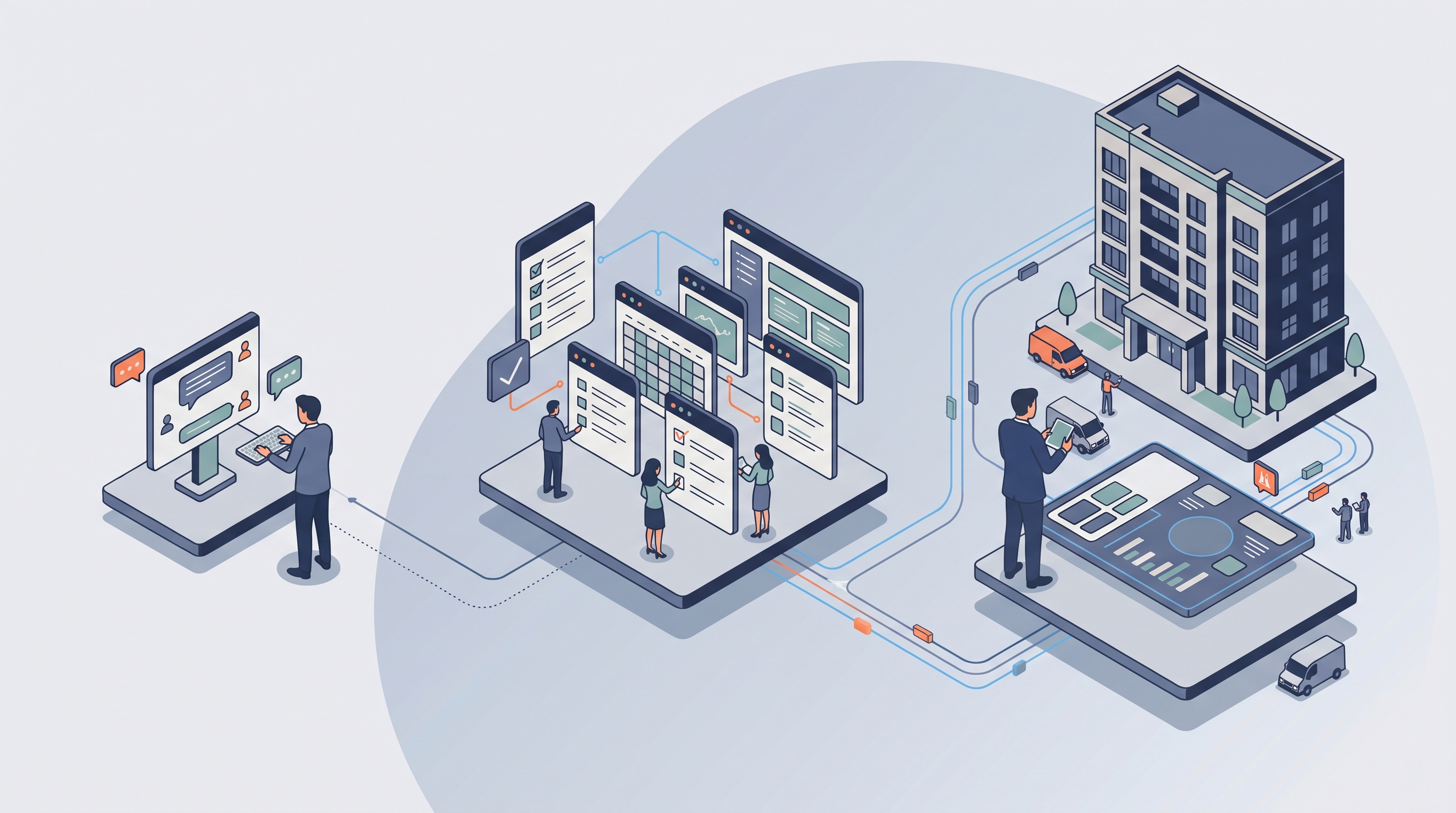
1. AI is Moving from “Bot” to Assistant to Worker
AI was a major focus of the Summit, but the discussion has evolved from experimentation and applications at the top of the funnel to what it really takes to put AI to work across an organization.
- The Shift: AI is quickly moving beyond rapid deployment as chatbots and leasing assistants to helping employees find information and analyze data. The focus ahead is how AI agents can actually execute work across core property-management workflows.
- What’s Next: It’s a significant opportunity for operators, but realizing that opportunity will require more than adding an AI layer to existing solutions. There are questions around data quality and governance, API access and the ability to write to core systems and ultimately the shape of the technology architecture itself.
- RET’s Take: The next phase of AI deployment will likely happen on two levels. Vertical, use-case-specialized AI will increasingly execute work seamlessly within individual workflows, for example executing a renewal, creating a work order, coordinating a unit turn or scheduling vendors and service providers without a human handoff. Horizontal, enterprise AI will connect systems and coordinate what happens across the organization, such as pulling from multiple data sources to drive portfolio analysis and decision-making and coordinate workflows across point solutions. The opportunity is not simply adding AI to existing software, but creating an environment where AI can reliably move work from one system to another and create real operational value.

2. The Ground Under the Stack Is Shifting
The way operators think about their technology stack is changing as the industry moves from a collection of individual solutions toward a more interconnected technology environment. That raises questions about the technologies themselves, and also means taking a harder look at what critical assets and capabilities belong inside the organization and where external technology can add the most value.
- The Shift: Proptech 1.0 was defined by the proliferation of specialized tools. Operators moved away from consolidated technology because they wanted the best tool for each job. Now, as many of those tools mature and grow in scope and complexity, the value is shifting toward how well they connect, and where critical data and processes live. Proptech 2.0 is bringing the industry’s focus again on the tradeoffs between consolidation and “best of breed” with a different lens: The goal is “fewer seams, not fewer choices.” Operators are putting resources behind that shift, with more standing up in-house data infrastructure, focusing on API access, and starting to experiment with in-house AI coding and agent creation.
- What’s Next: The Summit explored the continued evolution of the property management stack, the growing importance of data infrastructure, the coming need for agent orchestration and new approaches to how software and AI are built and integrated. Company priorities reflect that focus: productivity is the top operational goal, alongside resident experience. That puts a premium on technology that can work across the organization rather than solve just one problem.
- RET’s Take: Products need to solve meaningful problems, work within existing processes and ultimately help operators run their businesses more effectively, without creating another layer of complexity or taking away what creates differentiation and resident experience. The most valuable technology won’t necessarily be the product with the longest feature list, but the technology that fits naturally into how an operator and their renters want to engage and can evolve as those needs change. But as interoperability becomes critical and data/systems access becomes the gating constraint for AI agents, operators need to be increasingly thoughtful about whether their infrastructure constrains flexibility and vendor choice, especially as new use cases arise for AI agents almost daily.
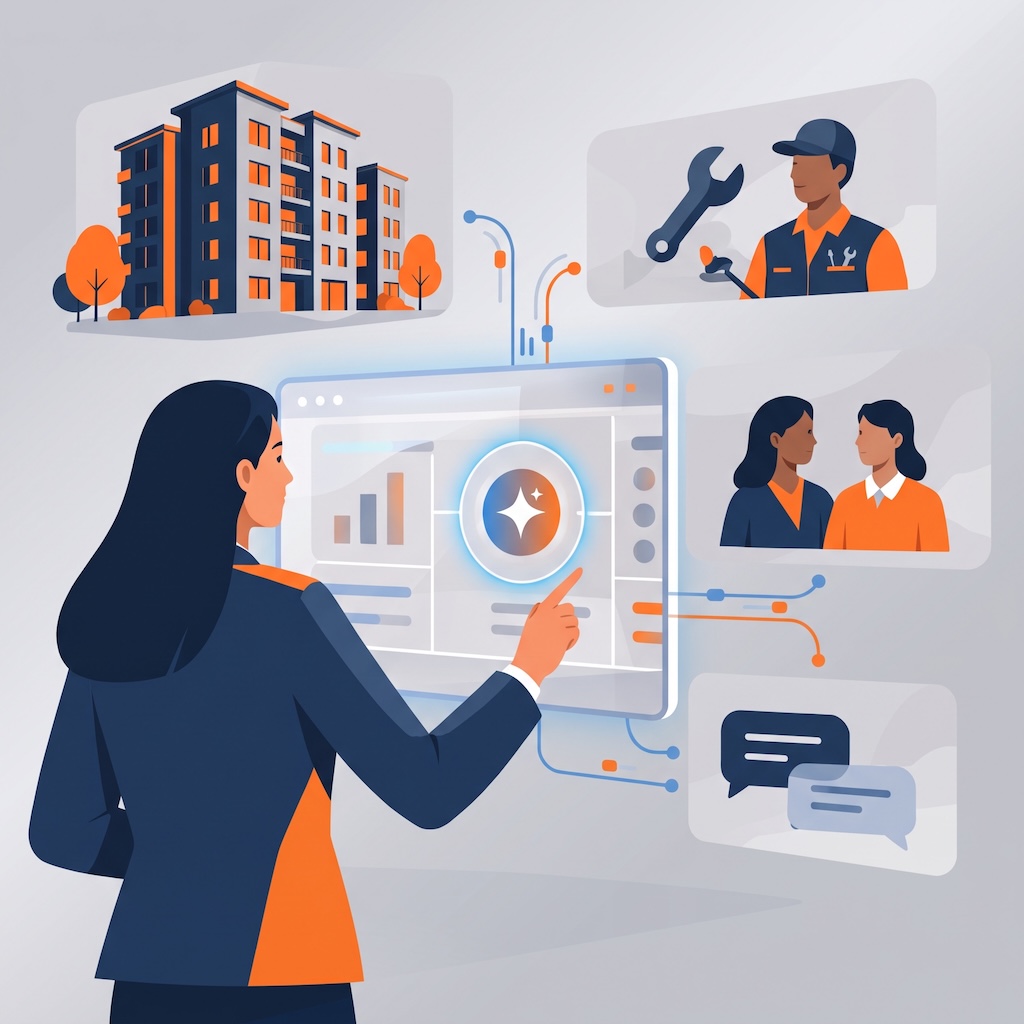
3. The Way Technology Companies Create Value Is Changing
As technology becomes more deeply embedded in how operators work, the Summit looked beyond adoption to consider how companies will create and capture value in a market increasingly shaped by AI.
- The Shift: The economics of software are shifting as AI reshapes the relationship between technology, workflows and labor. Questions that once centered on software cost per seat or per unit, are increasingly giving way to questions about workflow ownership, agent adoption, proprietary data and where technology companies can capture value.
- What’s Next: While still early innings, discussions also examined whether software companies in the rental stack can move beyond traditional seat-based pricing, how much value will accrue to application vendors versus AI platforms and whether open or closed technology ecosystems will ultimately prevail.
- RET’s Take: As AI agents in the broader economy continue to take on more workflows traditionally executed manually, the opportunity is in understanding where value will accrue as the economics of the industry evolve.

Looking Ahead to the Next Decade
The Summit offered a chance to step back from individual products and technologies and consider how the industry is changing as a whole, from the way operators use technology to how they build, price and create value.
The overarching takeaway is the pace of change and the question of whether the industry’s technology infrastructure can keep up.
Bringing operators, entrepreneurs and investors together provides a perspective that none of those groups can have alone. Operators see the problems firsthand. Founders are building solutions to address them. Investors have a view across companies and markets.
That exchange is at the heart of the RET network, and it is what makes the Summit such a valuable opportunity to step back from the day-to-day and think about what happens next.
We’re grateful to everyone who joined us and contributed to this year’s Summit, and we look forward to continuing the conversation.

RET Ecosystem in the News
RET Ecosystem Thought Leadership
- Commercial Observer: RET Industry Principal Jameson Hartman weighs in on the rise of larger proptech seed rounds, noting how AI is helping startups move from zero to revenue faster by shortening development and sales cycles. Jameson also highlights how the pace of AI-driven innovation is changing expectations for early-stage companies and investors.
- Insights by Blueprint: Partner Christopher Yip outlines RET’s “second era” of AI, as owner-operators shift from customer-facing applications toward using AI to improve internal workflows, productivity and measurable ROI. Yip discusses rising technology budgets, the growing importance of data infrastructure and governance, and the evolving role of startups as operators weigh building AI capabilities in-house versus partnering with emerging technology companies.
- Multifamily Executive: Christopher Yip shares his perspective on multifamily’s shift from point-solution AI tools toward specialized agents and integrated platforms that can drive measurable operational value. Yip discusses how the industry’s next wave of AI is moving beyond conversational tools to more targeted applications across leasing, maintenance and other core workflows.
- Propmodo: AppFolio VP of Product Cat Allday explores where AI can make the biggest impact in property management and where operators are getting it wrong. Allday sees AI’s greatest value in handling administrative tasks so on-site teams can focus on resident relationships, serving as an assistant rather than a replacement.
- Commercial Observer: For the fourth consecutive year, John Helm, Christopher Yip and Jameson Hartman have been named to the publication’s annual ‘Power Tech & AI’ list, which recognizes the most consequential leaders shaping the real estate technology sector.
- GlobeSt: In recognition of the firm’s significant impact and influence on the future of multifamily real estate, RET Ventures was selected as an honoree for the 2026 cohort of GlobeSt’s Influencers in Multifamily Real Estate.
Portfolio Companies in Action
- Funnel Partners with RealPage: Portfolio company Funnel Leasing announced a partnership with RealPage, giving property operators greater interoperability across their tech stacks. The integration pairs Funnel’s premier front-office platform with RealPage’s screening, payments, pricing and availability capabilities, allowing customers to leverage both solutions within a more connected technology ecosystem.
- Gigstreem and Aerwave Combine: RET portfolio company Gigstreem has combined with Aerwave to create a national managed WiFi and connectivity provider serving the multifamily and commercial real estate sectors. The combination brings together two established connectivity platforms to expand scale, engineering capabilities and service offerings for increasingly consolidated multifamily operators.
- Funnel Enters a New Era: Funnel Leasing unveiled the next evolution of its multifamily AI platform, embedding Fenix AI and Funnel Fabric across the renter lifecycle to automate key workflows, streamline operations and free on-site teams to focus on high-value resident interactions that require a human touch.

